Selecting authentic period joinery requires a keen eye for historical architectural detail alongside a practical understanding of solid timber construction methods. This comprehensive guide examines the fundamental structural distinctions between nineteenth and early twentieth century entrance joinery, helping property owners select period accurate replacements that honour original architectural heritage while meeting current thermal efficiency and building security standards.
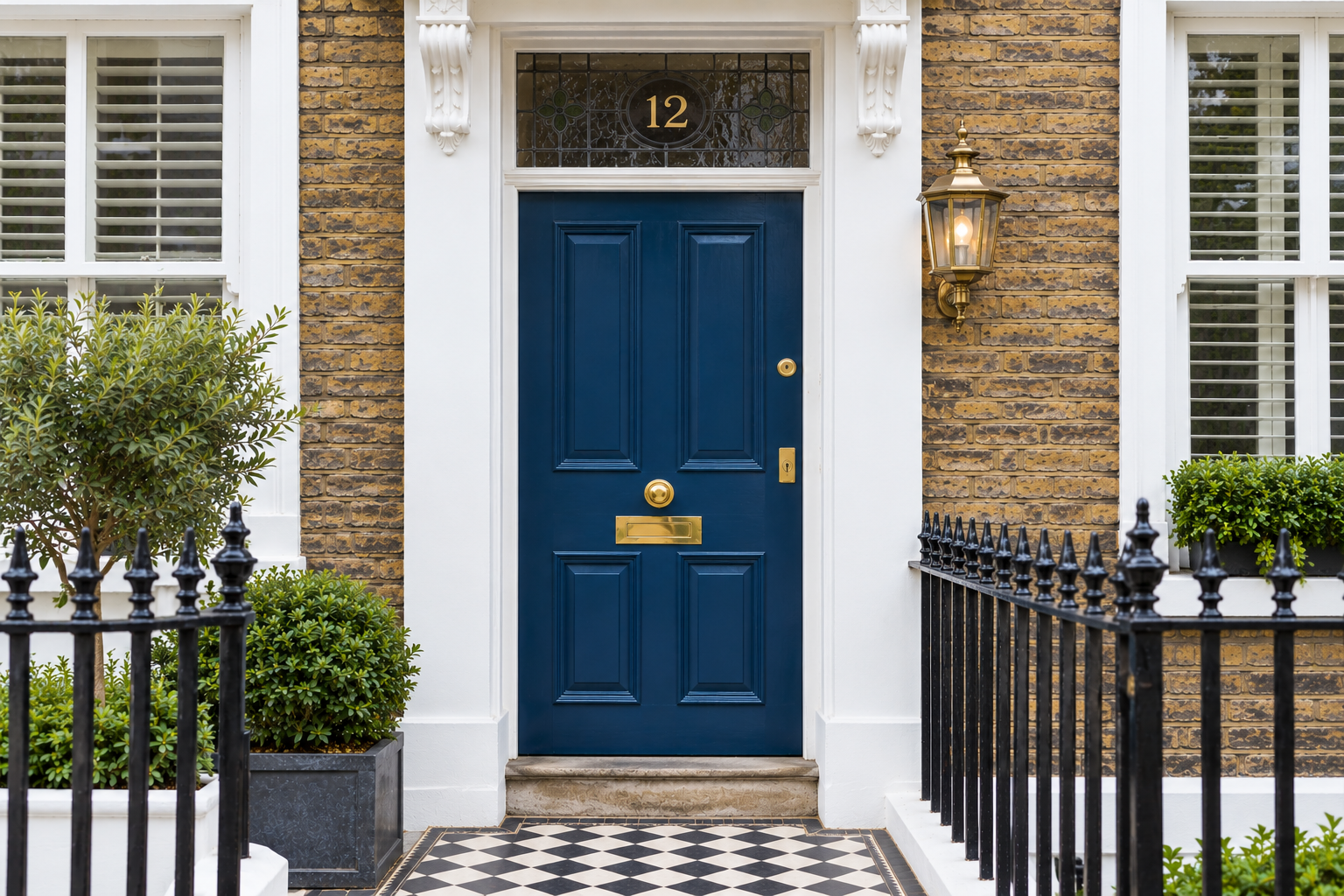
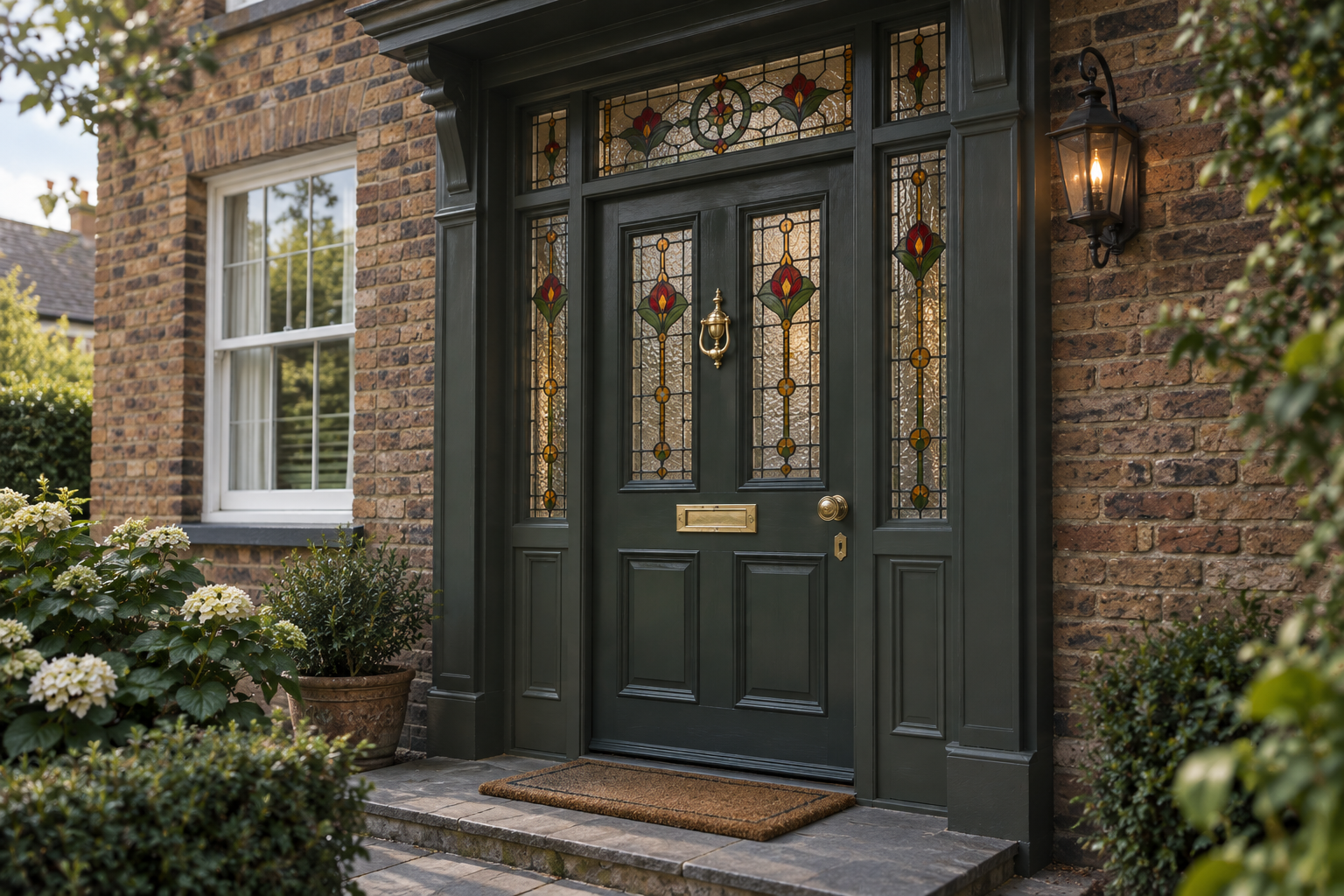
Victorian timber doors typically featured a substantial four panel design with deep bolection mouldings and heavy raised fielded panels, creating a bold sense of security and privacy for grand townhouse entrances. In contrast, Edwardian entrance doors embraced lighter aesthetic trends, incorporating much larger upper glazed sections with intricate stained glass panels that flooded gloomy ground floor hallways with warm natural daylight. Upgrading these distinctive historic front entrances demands careful consideration of durable timber species, authentic ironmongery, decorative leaded glazing techniques, and modern weatherproofing performance.
Restoring a classic period property brings incredible satisfaction, yet getting the front entrance wrong instantly ruins your kerb appeal.
Traditional front entrances do far more than welcome visitors because they set the definitive architectural tone for the entire building facade.
According to official UK Police burglary statistics, over 70% of forced entry incidents occur through an ill-fitting or structurally compromised entrance door, making robust joinery paramount for historic homes.
Choosing between an authentic Victorian four panel design and a light-filled Edwardian style demands a solid grasp of traditional joinery details.
Investing in professionally crafted timber joinery ensures your British property remains comfortably warm, thoroughly secure, and visually faithful to its original architectural heritage.
Key Takeaways
- Classic Victorian timber doors rely heavily on a symmetrical four panel design with solid timber raised panels that prioritize household privacy, structural strength, and dramatic shadow lines.
- Edwardian entrance doors incorporate larger upper apertures filled with colourful leaded stained glass panels to brighten internal hallways while adding distinct decorative charm.
- Modern bespoke reproductions successfully integrate advanced weather seals, high performance insulated glass, and concealed multipoint locking mechanisms into traditional joinery frames without compromising original period aesthetics.
Table of Contents
- Choosing authentic timber materials for lasting durability
- Selecting period accurate ironmongery and door furniture
- Integrating modern security locks into period timber entrance doors
- Meeting fire safety standards and draught proofing requirements
- Frequently Asked Questions around Entrance doors
Choosing authentic timber materials for lasting durability
Timber Selection for Period Authenticity
Victorian and Edwardian entrance doors required robust timber capable of withstanding heavy daily use while retaining crisp mouldings and deep raised panels. Selecting the correct timber species ensures long-term structural integrity without sacrificing delicate architectural details or original aesthetic character. Traditionally, slow-grown European oak and dense Scots pine were the primary choices for urban residences across the United Kingdom, delivering natural durability through high resin content and exceptionally tight growth rings.
Dense hardwood timber remains an outstanding material choice for faithful period restorations, offering superior natural resistance to physical impact and environmental wear. Species such as oak or sapele provide a substantial physical feel and refined grain patterns, though they require precise kiln drying to prevent moisture movement after installation. Specifying properly seasoned hardwoods limits timber shrinkage and bowing, ensuring frame joints stay tight, secure, and square across decades of exposure to fluctuating UK weather.
Engineered Softwood and Accoya Wood Performance
Modern joinery techniques allow home owners to combine historic architectural standards with superior material stability. Multi-layer engineered softwood uses laminated timber sections with opposing grain directions to cancel out internal movement and structural tension. This advanced timber construction reduces warping, twisting, and cupping by up to 80% compared to traditional solid timber sections, providing a perfectly stable core for decorative paint finishes.
For maximum longevity, Accoya wood represents a remarkable technical advancement in exterior timber production. Through a non-toxic acetylation process, the cell structure of sustainable softwood is modified to permanently resist moisture absorption. Accoya wood achieves a 75% reduction in swelling and shrinkage compared to standard softwoods, making it ideal for painted front doors exposed to harsh British weather. This exceptional dimensional stability prevents exterior paint coatings from cracking, which significantly extends repaint intervals.
Integrating Weather Sealing and Investment Value
Traditional period doors often suffer from persistent draughts caused by natural timber movement over changing seasons. Incorporating discreet perimeter weather sealing within the frame rebates solves this functional vulnerability without compromising historic sightlines or traditional moulding profiles. Modern flexible seals maintain acoustic separation and prevent rainwater ingress around decorative raised panels, maintaining interior thermal efficiency throughout autumn and winter.
Investing in high-specification timber components increases overall property value and substantially lowers long-term maintenance costs. A bespoke entrance door built from premium timber typically costs between £2,000 and £4,500 depending on glass specifications, panelling detail, and brass ironmongery. However, properly maintained engineered timber joinery easily lasts over a century. Pairing correct timber selection with effective weather sealing ensures your period entryway remains draught-free, highly secure, and visually appealing for generations.
Timber Specification Comparison
| Specification | Primary Features | Lifespan | Cost Bracket | Building Regulations Compliance |
|---|---|---|---|---|
| Solid Accoya or European Oak | Handcrafted authentic period profiles, raised and fielded panels, excellent dimensional stability, bespoke glazed upper panels | 60+ years | £3,000 – £6,000+ | Exceeds Part L thermal efficiency with sub 1.4 U-value, fully compliant with PAS 24 security and Part M threshold options |
| Engineered Hardwood Timber | Multi-layer laminated timber core to prevent twisting, factory micro-porous paint finish, accurate Victorian and Edwardian mouldings | 30 – 50 years | £1,800 – £3,500 | Fully compliant with Part L conservation standards, PAS 24 security rated, Part Q compliant for new build works |
| Solid Core Heritage Composite | 48mm high-density timber core with thermo-plastic skin, woodgrain texture, low maintenance, period style stained glass units | 25 – 35 years | £1,200 – £2,200 | Complies with Part L target U-values, meets PAS 24 enhanced security standards, Part Q certified |
| Paint-Grade European Redwood | Traditional budget solid timber joinery, knot-free clear softwood, requires regular paint maintenance and weather sealing | 20 – 30 years | £800 – £1,500 | Requires insulated core panel upgrade for Part L compliance, optional multi-point locking for PAS 24 compliance |
Selecting period accurate ironmongery and door furniture
Victorian proportions and heavy metalwork
Victorian front doors demanded substantial hardware that reflected the industrial manufacturing triumphs of the nineteenth century. Cast iron dominated early Victorian joinery, though unlacquered brass quickly became the preferred choice for prosperous urban residences. High-status properties favoured oversized centre door knobs positioned firmly in the middle of the central lock rail. These operational handles sat alongside cast iron rim latches and heavy rim locks fitted directly to the internal face of the timber door.
The introduction of the Uniform Penny Post in 1840 fundamentally altered entrance design, making letterplates a standard feature. Early Victorian letterplates were surprisingly narrow, often measuring less than eight inches wide. Homeowners paired these with distinctive brass door knockers, typically cast in classical motifs such as lions’ heads or doctor’s knockers. Authentic architectural ironmongery from this era should feature sharp casting details and hand-finished edges, avoiding the mechanical uniformity of modern mass-produced fittings.
Edwardian elegance and decorative harmony
The Edwardian era brought a marked preference for lighter, airier entrance spaces and more elaborate decorative influences. Influenced heavily by the Arts and Crafts movement alongside Art Nouveau motifs, Edwardian smiths produced softer, organic designs. Polished brass remained popular, but aged nickel and black iron fittings gained significant market share, accounting for nearly 30% of domestic specifications by 1910.
Door furniture shifted towards integrated functional arrangements rather than scattered individual pieces. Letterplates grew significantly larger to accommodate wider postal items, moving from the middle rail down to the bottom panel or up to the top rail depending on regional joinery styles. Centre door knobs remained a common fixture, though architects frequently replaced them with elegant lever handles mounted on backplates displaying subtle floral engravings.
Practical security and authentic finishes
Specifying historical door furniture requires balancing period aesthetics with contemporary security standards. Original rim latches rarely meet modern insurer standards, meaning contractors must install a British Standard BS3621 mortice lock hidden within the timber stile. Modern reproduction pieces crafted from solid unlacquered brass will naturally tarnish over time, acquiring an authentic patina that suits period properties far better than lacquered alternatives.
Investing in solid metal hardware rather than hollow stamped brass ensures the door operates with a reassuring weight. High quality reproduction sets usually start around £150 for basic fittings, rising to £400 for comprehensive sets featuring matching escutcheons, hinges, and heavy knockers. Ensure every fixing screw matches the base material, as modern zinc-plated steel screws will cause galvanic corrosion against solid brass components.
Integrating modern security locks into period timber entrance doors
Meeting British Standards Without Compromising Aesthetics
Period front doors crafted from solid pine or oak feature deep stiles that readily accept high-grade mechanical locks. Home insurance underwriters across the UK normally insist on fittings that comply with BS3621 security standards to guarantee adequate protection against forced entry. Installing Five lever mortice deadlocks into the thick vertical stile of a Victorian door provides this required level of security while remaining completely invisible from the exterior when the door is closed.
To maintain authentic period functionality, joiners usually pair a heavy deadbolt with traditional rim nightlatches positioned further up the stile. Modern surface-mounted nightlatches are engineered with brass or bronze casings that replicate original nineteenth-century ironmongery. This dual setup satisfies modern insurance requirements without altering the distinctive historic facade of an Edwardian or Victorian entranceway.
Adapting Timber Stiles for Multipoint Locking Systems
Concealed multipoint locking systems offer maximum physical resistance by engaging multiple bolts along the door frame simultaneously. Integrating these mechanisms into historic timber doors requires skilled joinery, as deep channels must be routed cleanly along the edge of the leaf. Selecting a heritage-style system with a narrow backset prevents the lock faceplate from interfering with decorative raised mouldings or glass beads.
Retrofitting these advanced hardware solutions typically costs between £250 and £500 per installation depending on the timber density and bespoke adjustments needed. Insurers frequently offer premium discounts of up to 10% for properties protected by multi-point hardware. The resulting setup offers contemporary draught exclusion and structural rigidity while maintaining a traditional timber appearance.
Preserving Structural Integrity and Timber Health
Cutting deep mortices into aged wood can weaken the timber stile if executed incorrectly. Joiners must measure the depth of the lock case precisely to avoid removing more than one third of the timber width at any given point. Excess timber removal invites moisture ingress, which ultimately leads to swelling, timber rot, and eventual mechanism failure.
Protecting newly exposed end grain inside the lock cavity with micro-porous wood preservatives prevents damp penetration. Injecting a clear wood sealer before fixing the lock case creates a permanent barrier against British weather conditions. This careful approach ensures the timber door remains structurally sound and operational for decades to come.
Meeting fire safety standards and draught proofing requirements
Timber Integrity and Fire Ratings
Upgrading a traditional entrance door often requires a fine balance between authentic period architecture and rigorous modern safety protocols. Period properties converted into flats, maisonettes, or commercial spaces frequently demand certified FD30 fire doors. These specialized timber assemblies provide at least thirty minutes of structural fire resistance, holding back flames and toxic fumes to keep communal exit routes clear.
Achieving this high-level performance without sacrificing classic Victorian or Edwardian panel detailing relies on precise joinery methods. Modern workshops craft bespoke doors using solid, high-density timber cores finished with historic moulding profiles. Concealed intumescent seals are mortised discreetly into the door stiles and frame rebates. During a fire, these heat-activated strips swell up to a hundred times their original size, sealing the perimeter gap against dangerous hot gases.
Thermal Efficiency and Part L Compliance
Victorian and Edwardian timber doors were constructed with incredible craftsmanship, yet original installations are notorious for allowing heat to escape. Meeting modern building regulations Part L requires strict thermal efficiency standards, which can prove challenging when attempting to preserve the character of a heritage property.
Integrated draught exclusion systems offer a subtle solution that satisfies conservation officers and building inspectors alike. Precision grooves machined directly into the frame accommodate hidden draught proofing strips. These resilient elastomeric gaskets flex during operation to stop air infiltration completely without spoiling the historic timber face. Fitting high-specification weather seals can lower localized heat loss through front entrances by over 20%, saving property owners up to £150 annually on heating bills.
Balanced Installation and Hardware Integration
Retrofitting functional modern upgrades into historic openings demands meticulous installation. Installers must ensure that heavy timber frames remain perfectly plumb to prevent binding over time. Frame fixings should be hidden behind decorative architraves to keep structural anchor points invisible from the street. Selecting heavy-duty brass or stainless-steel hinges is equally important to support the added mass of fire-rated timber without sagging.
Combining full thermal protection with fire resistance creates a robust barrier that withstands daily British weather while protecting lives. Investing in engineered timber components guarantees long-term dimensional stability, preventing the warping and sticking common to untreated softwood doors. This complete technical approach enhances overall performance while fully preserving historic streetscapes.
Frequently Asked Questions around Entrance doors
What is the main difference between Victorian and Edwardian entrance doors?
Victorian entrance doors usually feature four or six raised panels set within heavy, ornate mouldings. They tend to look grand, solid, and somewhat formal, often painted in dark gloss colours like deep red, navy blue, or hunter green.
Edwardian doors are generally wider and feature decorative glass in the upper half to let light into larger entrance halls. You will frequently see beautiful stained glass with floral or Art Nouveau patterns, giving these doors a lighter and more welcoming feel.
Should I choose timber or modern composite for a period home?
Timber is always the most authentic choice for a Victorian or Edwardian property. Natural timber can be carved precisely to match original architectural details, and it can be easily repaired or repainted over time to keep it looking fresh.
Modern composite doors can mimic wood to a degree, but they often lack the deep mouldings and correct proportions of a genuine period door. For true historic accuracy and the best visual finish, sustainably sourced hardwood is usually the recommended option.
How can I make a traditional timber entrance door warm and energy efficient?
Modern joinery methods allow us to build traditional timber doors with high thermal performance built right in. We use continuous draught seals fitted neatly into the frame alongside weather bars at the threshold to stop cold air and driving rain entering your hallway.
If your design includes glass panels, fitting double glazed units with low emissivity glass will keep heat inside your home. You get all the classic period charm without suffering from cold draughts or high energy bills.
What glass style is authentic for Victorian and Edwardian entrance doors?
Victorian glass was often subtle, featuring etched or frosted designs, simple leaded lights, or geometric patterns. These allowed natural light in while maintaining privacy from the street outside.
Edwardian glass was much more colourful and expressive. Stained glass panels with flowing floral patterns, stylized leaves, and Art Nouveau motifs were exceptionally popular. Replicating these historic designs with modern safety glass adds immense character to your front entrance.
What locks should I install to keep a period entrance door secure?
Security is vital, but modern locking mechanisms do not have to ruin the classic appearance of your door. We recommend fitting a high quality British Standard 5 lever mortice deadlock alongside a traditional rim latch for daily convenience.
Multi point locking systems can also be discreetly built into bespoke timber doors. These operate smoothly while offering excellent protection, meeting modern home insurance requirements without compromising on period style.
How do I know if my existing entrance door can be restored?
Inspect the door carefully for signs of soft timber, severe warping, or deep structural cracks. If the timber is mostly sound and the damage is confined to surface paint or minor surface rot, a skilled joiner can repair and restore it using traditional timber splicing techniques.
However, if the door has lost its shape, droops severely in the frame, or has rotted through core structural joints, replacement is usually the best option. A bespoke replica will match the original proportions while offering vastly superior security and insulation.
Which timber species is best for a durable traditional front door?
Hardwoods like Accoya, European Oak, and Sapele are the top choices for external entrance doors. Accoya is particularly popular because it undergoes a non toxic treatment process that renders it virtually immune to shrinking, swelling, and rot.
European Oak offers a classic grain structure that performs brilliantly and feels exceptionally sturdy under foot. Sapele is a dense hardwood that provides fantastic durability and a smooth surface, perfect for receiving a fine painted finish.
What paint colours suit Victorian and Edwardian front doors best?
Victorian doors were traditionally finished in rich, dark shades such as deep Brunswick green, navy blue, burgundy, or black. High gloss finishes were hugely popular because they reflected light well and stood out against bright stonework or red brickwork.
Edwardian homeowners favoured lighter, fresher palettes to suit their airier home designs. Pastel tones, soft greys, cream, and sage green work beautifully on Edwardian properties, though classic dark gloss finishes remain a timeless choice for both eras.
Do I need planning permission to replace my entrance door?
For most standard homes, replacing your front door falls under permitted development, meaning you will not require planning permission. However, if your property is listed, you will need Listed Building Consent before making any changes.
If your home is in a Conservation Area with an Article 4 Direction in place, local planning rules may restrict alterations to front facades. In these cases, your new door must match the original style, colour, and materials as closely as possible.
How much maintenance does a modern timber entrance door require?
Today, high quality factory applied paint coatings mean timber doors require far less upkeep than they used to. Wiping the surface down with warm soapy water twice a year to remove dust and atmospheric dirt will keep the paint looking vibrant.
You should also lubricate the hinges and locking mechanisms annually. Depending on exposure to direct sun and rain, a light coat of micro porous paint every five to eight years will protect the timber and keep your entrance looking immaculate for decades.
Someone knocking on the door?
Browse our full range using the button below.