Ensuring that a fire door fully complies with UK legislation requires a thorough understanding of the standards governing hardware selection and upkeep. In this guide, we break down key regulatory requirements, essential components, and maintenance best practices to help you achieve and maintain full compliance for your property.
Key Takeaways
- Fire safety legislation requires that door hardware be correctly tested and certified for fire resistance.
- Documentation such as the Declaration of Performance is vital for proving legal compliance during building inspections.
- Intumescent materials, including seals and hinge pads, are necessary to prevent the passage of fire and smoke.
- Regular maintenance and third-party certification are essential to ensure doors function correctly throughout their service life.
Table of Contents
- The Foundations of Fire Safety Law
- The Role of CE and UKCA Marking in Hardware Selection
- Essential Hardware, Hinges, Closers, and Latches
- Intumescent Protection: Why Seals and Pads Matter
- Maintaining Functionality, Compatibility and Certification
- Avoiding Common Pitfalls in Fire Door Maintenance
The Foundations of Fire Safety Law
Fire doors are critical components of a building safety strategy. In the UK, the primary piece of legislation governing this area is the Regulatory Reform (Fire Safety) Order 2005. This law places a duty on the person responsible for a premises to ensure that fire doors are properly maintained and fit for purpose at all times.
Failure to comply with these regulations can lead to severe penalties or even prosecution if a fire occurs. You can find more information about these requirements in our fire door safety resources.
Key Standards and Documentation
To ensure that hardware is suitable for a fire door, it must be tested and certified. The industry relies heavily on Approved Document B, which provides guidance on meeting the functional requirements of building regulations. This document outlines the standards required for fire resistance and smoke control.
The Role of CE and UKCA Marking in Hardware Selection
Understanding the importance of certification
When choosing hardware for fire doors, ensure that every component meets strict safety standards. The most reliable way to check this is to look for the CE or UKCA marking. These marks indicate that the product has been rigorously tested and meets the legal requirements for fire safety in the UK and Europe. Without these symbols, you cannot be certain that the hardware will perform as expected during an emergency.
Explore our full selection of certified fire door hardware →
Essential Hardware, Hinges, Closers, and Latches
The components of a compliant fire door
When selecting hardware for fire doors, you must ensure every piece is fit for purpose and tested to the relevant British Standards.
Fire doors rely on specific parts to remain closed during a blaze, preventing the spread of smoke and heat. Using fire-rated hinges is the first step in this process. These hinges must be strong enough to support the door’s weight and should be tested to ensure they do not fail at extreme temperatures. You should always check that the hinges are compatible with the specific door leaf material.
Closing and latching mechanisms
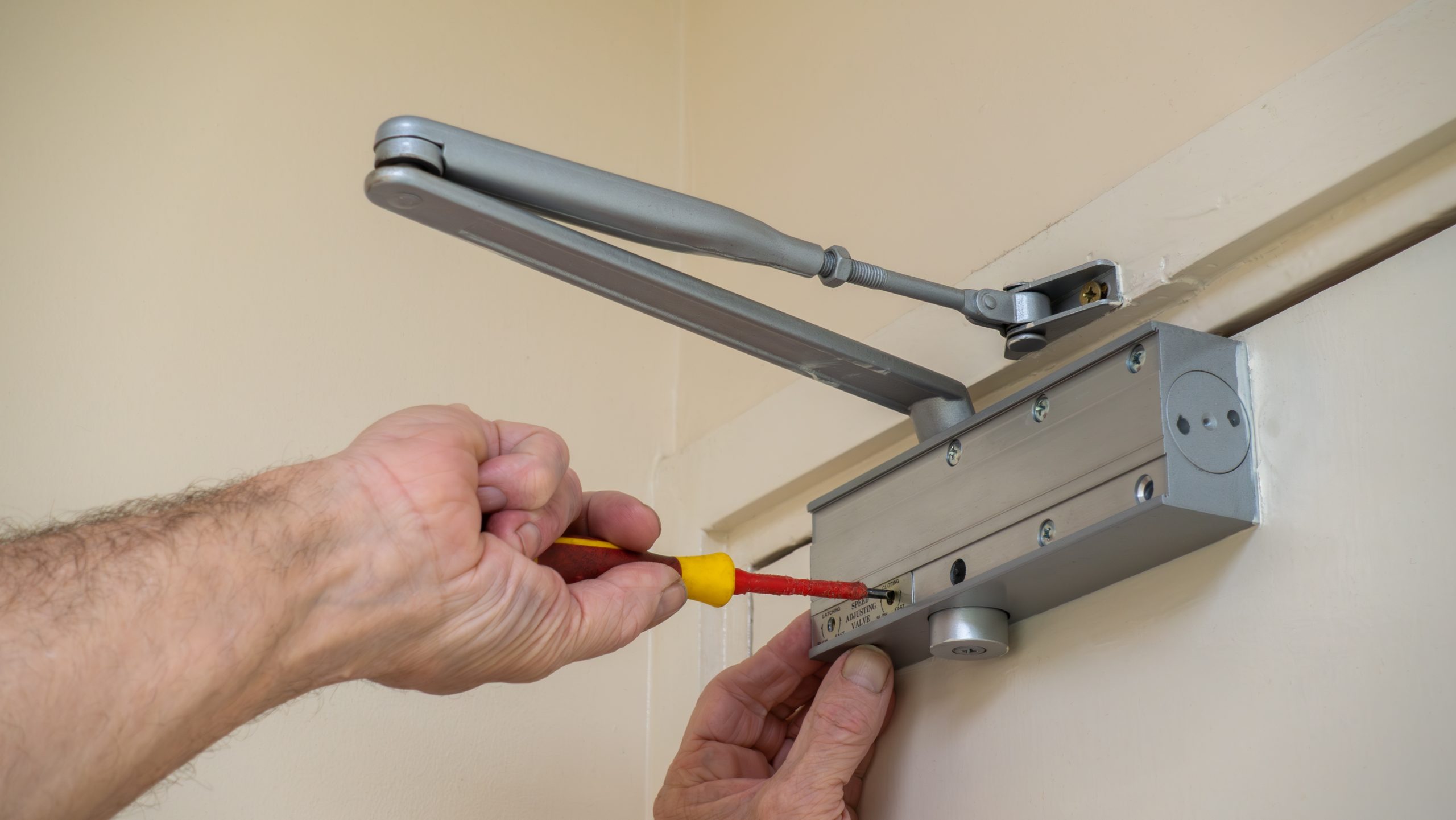
A fire door is only effective if it shuts completely after every use. Overhead door closers are vital for this reason, as they provide the force needed to pull the door into its frame. It is essential that these units are fitted correctly and are not adjusted to close too slowly, as they must overcome the resistance of any latching mechanism.
To further improve safety, intumescent seals are often fitted around the door frame. These seals expand when exposed to heat, creating a tight seal that prevents smoke from travelling through gaps around the door.
Securing the door assembly
The latching system is the final part of the door-holding system, keeping the door firmly in the frame during the early stages of a fire.
Mortice latches are commonly used for this role because they sit inside the door and provide a secure fix. You must ensure that these latches are fire-tested and carry the correct CE or UKCA marking. Never replace standard hardware with non-compliant items, as even a small change can compromise the entire fire safety rating of your door assembly.
You can browse our online shop for a wide range of verified fire door hardware.
Explore our full selection of certified fire door hardware →
Intumescent Protection: Why Seals and Pads Matter
The role of intumescent protection in fire doors
Fire doors rely on specialist materials to keep people safe during an emergency. Intumescent products are essential components because they react when exposed to extreme heat. When temperatures rise, these materials expand to fill any voids. This process prevents fire and toxic smoke from spreading through the building. Without proper protection, even a high-quality door might fail to hold back flames for the required duration.
Key components for safety
One of the most important aspects of safety is fire door gap management. If the gaps around the door leaf are too large, smoke can easily pass through the frame. To solve this, you must install high-quality seals. Graphite seals are a common choice because they are durable and expand rapidly when heated to form a firm barrier. By maintaining these gaps, you ensure the door performs exactly as the manufacturer intended.
Protecting critical hardware
The hardware attached to a door can become a weak point during a fire. Metal hinges conduct heat, which can cause the surrounding timber frame to char. To prevent this, installers should always use intumescent hinge pads. These pads sit behind the hinge plates and swell during a blaze to insulate the ironmongery.
This small addition keeps the structure stable and helps the door stay in place while people escape. By combining these different elements, you create a robust system that meets all current safety regulations.
Maintaining Functionality, Compatibility and Certification
Ensuring long-term performance
Selecting the right hardware is only the first step in ensuring a building remains safe. Maintaining functionality over time requires a strict focus on how different components work together. You must ensure that every piece of hardware is fit for purpose and remains fully operational throughout the door’s lifespan.
Checking compatibility and standards
When you choose items such as hinges, closers, or fire door locks, you must confirm that they are suitable for use on a fire-resisting door set. You should always refer to the manufacturer’s specific fire door test evidence.
This documentation explains exactly which items have been tested together to ensure the door closes correctly in an emergency. Relying on hardware compatibility is essential because mismatched parts can prevent the door from latching or cause the seals to fail during a fire.
Regular maintenance routines
Even the best hardware will eventually wear down if it is not looked after. You should set up a regular inspection programme to check that all door hardware is secure and free from damage.
Ensure that hinges are lubricated and that closers are adjusted so the door shuts firmly into the frame every time. If any part becomes loose or damaged, it must be replaced immediately with a like-for-like part that matches the original certification details.
Avoiding Common Pitfalls in Fire Door Maintenance
Common errors during door maintenance
Keeping a fire door in good working order is essential for safety. Many people make the mistake of ignoring minor wear and tear on door furniture. If handles or locks become loose, they can stop the door from latching correctly during a fire. Regular checks help to identify these small problems before they become dangerous issues that compromise the entire assembly.
Best practices for upkeep
A rigorous programme of fire door inspection should schedule inspections to occur at least every six months. During this check, our engineers will ensure that your intumescent seal stays intact and that the door closes fully into the frame without any obstruction. Another frequent oversight involves the self-closing speed adjustment.
If the door closes too quickly or too slowly, it may fail to latch properly or cause a trip hazard. They will always ensure the closing mechanism allows the door to shut firmly against the rebate under its own power and that hinges or seals are not painted over, as this often prevents the equipment from working as it was designed to do in an emergency.
Your first choice for certified, high-quality fire door hardware
At Doorfit, we supply a wide range of precision-engineered fire door hardware, fittings and accessories for both commercial and domestic settings.
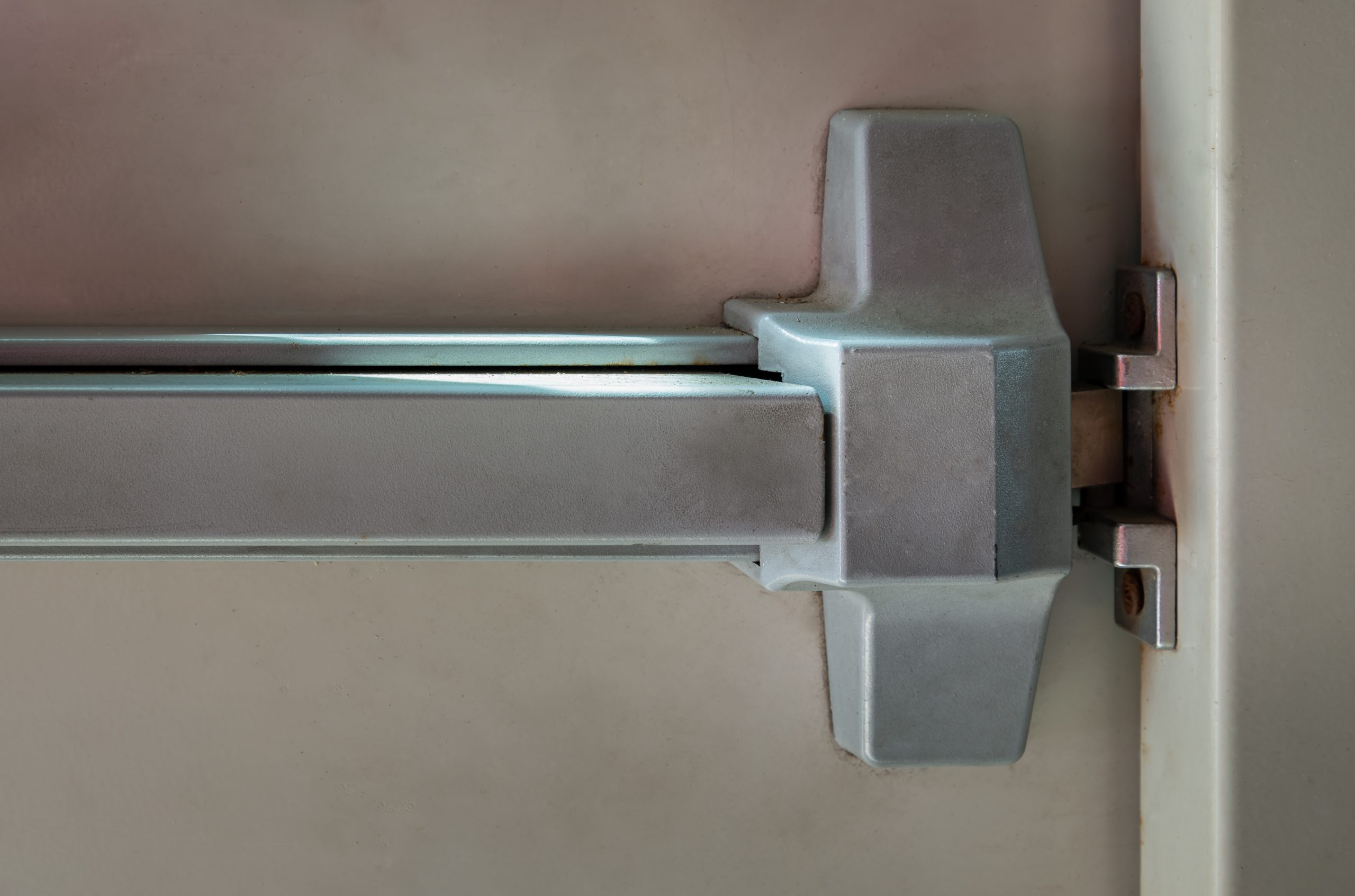
Explore our full collection today to purchase everything from intumescent fire door seals and mandatory signage to Certifire-approved locks and BS EN1125-compliant panic hardware.
Please note: It is strongly recommended that all ironmongery intended for installation to a fire-resisting door is selected and fitted strictly in accordance with the relevant door manufacturer’s installation guidelines, recommendations, and certification requirements.