
Apply Discount Code


LUN-8605-ZP
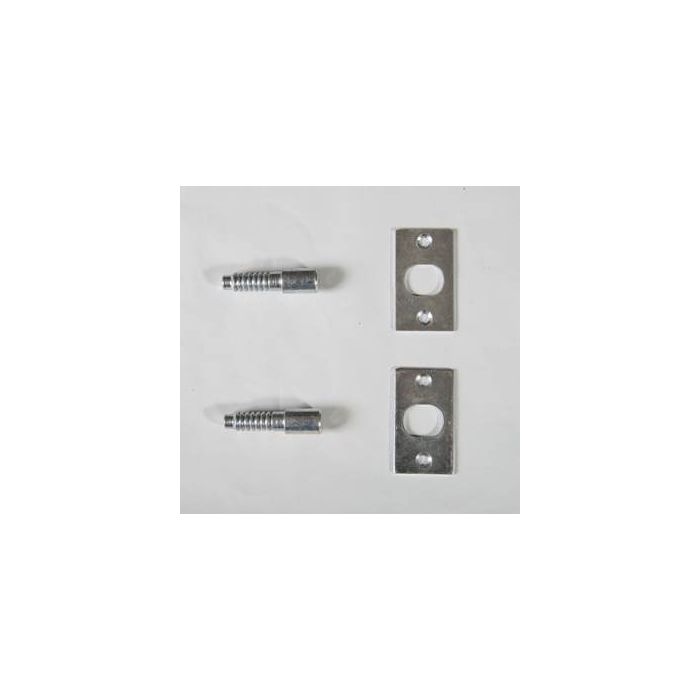
8605 Zinc Plated Hinge Bolts
Main image
Click to view image in fullscreen
![]()
8605 Zinc Plated Hinge Bolts
In stock
Delivery Information
| Delivery Time Frame | Delivery Information |
| Next Working Day By 1PM | When an order is placed by 3pm for next working day on certain items |
| Standard Delivery | Usually delivered in 2 to 4 working days |
| Delivery Charges | |
| UK Mainland | Prices start at £3.95 for very small items, £6.50 for small, £9.50 for medium and £20 for large/long items |
| Scottish Highlands & Islands, Northern Ireland & Ireland | Prices from £30, please see our delivery page for more info. |
View Delivery Information
£3.12
Incl. VAT
£2.60
Excl. VAT
Incl. VAT
Excl. VAT
Incl. VAT
Excl. VAT
Price is for/per pairs
-
+
See our full range:
Description
Reinforce Vulnerable Timber Doors Against Forced Entry
Securing an external timber door involves much more than fitting a strong deadlock on the leading edge. All too often, the hanging side of the door remains completely exposed to physical attack. Outward opening timber doors present a notable security challenge because their hinge knuckles and pins sit entirely on the external face of the property. An intruder armed with basic hand tools can swiftly grind down, cut, or tap out hinge pins. Once those pins are removed, the door leaf can simply be levered out from the hanging stile, bypassing even the most sophisticated cylinder locks entirely.
The 8605 Zinc Plated Hinge Bolts provide a straightforward, heavy duty mechanical solution designed to counter this exact vulnerability. Commonly referred to in the trade as dog bolts or hinge security pegs, these solid metal fittings anchor the door leaf directly into the timber frame whenever the door is closed. By interlocking the door structure mechanically, they eliminate the reliance on hinge pins alone to keep the leaf securely seated in its frame rebate.
Whether you are upgrading secondary entryways, securing residential side doors, or strengthening timber doors across commercial facilities, these bolts offer indispensable passive protection. Manufactured with high-tensile steel cores and finished in robust zinc plating, they deliver dependable security that operates silently in the background every single time the door swings shut.
Comprehensive Protection Features
Resilient Zinc Plated Finish
External timber joinery faces constant exposure to moisture, seasonal temperature fluctuations, and atmospheric damp. The 8605 Zinc Plated Hinge Bolts feature a protective zinc electroplated barrier that actively resists oxidation, surface rust, and early metal fatigue. This hardwearing coating ensures the bolts slide smoothly in and out of their receiving keeps year after year without binding, catching, or tarnishing.
Concealed Passive Security
Unlike bulky surface-mounted bars or visible add-on padlocks, these hinge bolts remain totally concealed within the frame rebate when the door is closed. They require zero day-to-day user operation, key management, or digital codes. As soon as the timber door leaf latches, the solid steel pegs locate securely inside the frame plates, delivering continuous passive protection against leverage attacks without altering the visual balance of the entryway.
Stage by Stage Installation Pipeline
Stage 1 Position Marking and Morticing
Carefully mark the timber hanging stile between the existing butt hinges. Standard practice suggests placing bolts roughly 50mm above or below hinge leaves. Drill a clean pilot hole into the door edge at the specified diameter and depth, ensuring the bolt body sits perfectly flush and square with the timber edge.
Stage 2 Frame Alignment and Transfer
Transfer the central point of the protruding bolt tip onto the opposing timber door frame. You can use chalk or marking paste on the bolt head, then close the door leaf firmly against the rebate. This leaves an exact mark on the jamb, preventing binding issues and ensuring seamless door operation.
Stage 3 Keep Plate Recessing
Drill the main pocket cavity into the door jamb to receive the protruding bolt peg. Next, chisel a shallow recess for the steel keep plate so that it sits flush with the frame surface. Flush fitting avoids snagging draft strips or disturbing weather seals fitted to the frame rebate.
Stage 4 Mechanical Fastening and Testing
Secure the bolt and keep plate with quality woodscrews. Swing the door leaf several times to verify smooth travel without friction. When fully latched, the projecting steel pins lock the door securely, maintaining full door integrity even if external hinge knuckles are completely sheared away.
Detailed Specifications
| Specification | Rating or Standard | Practical Details |
|---|---|---|
| Product Model | 8605 Series | Specialist security hardware for outward and inward opening timber doors |
| Material Construction | High Tensile Steel Core | Rigid solid steel construction engineered to withstand extreme lateral shear force |
| Protective Coating | Electro-Zinc Plating | Effective corrosion protection suited to exterior doorways and unheated outbuildings |
| Door Substrate Suitability | Timber Joinery | Designed for solid softwood, hardwood, and composite core timber door assemblies |
| Recommended Quantity | Pair per Door Leaf | Standard practice utilizes two bolts per leaf, placed adjacent to top and bottom hinges |
| Operation Mode | Automatic Interlocking | Concealed passive engagement occurs seamlessly every time the door leaf closes shut |
Professional Best Practices and Practical Application
Security upgrades often focus solely on the locking edge, yet insurance claims repeatedly reveal that vulnerable hinges remain a favoured target for forced entry. When jemmy bars are applied between the frame and the hanging stile of an outward opening door, standard hinge screws can pull free from timber jambs with surprising ease. Fitting the 8605 Zinc Plated Hinge Bolts directly prevents this levering action. Even if an intruder manages to dislodge hinge plates or hacksaw the pivot pins completely, the door leaf stays trapped firmly inside the rebate, held fast by the interlocking steel pins.
For properties with high traffic or heavy external solid timber doors, joiners frequently install two or three bolts across the hanging edge. Positioning one bolt slightly below the top hinge and another slightly above the bottom hinge provides balanced anchoring against pry tools. In commercial back-of-house exits or storerooms, a third central bolt provides further resistance against deliberate physical impacts. Because these components do not require any adjustments once set, they remain virtually maintenance-free while keeping your property fully secured.
Need Technical Advice for Your Project?
Our experienced architectural ironmongery team is on hand to help you choose the right door hardware, verify timber compatibility, and satisfy UK building security requirements.
Contact Our Team